
Byz-GOVAG
Scope, Methodology, Objectives
The research scope, methodology and objectives of the Byz-GOVAG programme.
The Byz-GOVAG Research Project: Purpose, Methodology, Objectives
The Byz-GOVAG Research Project aims to shed light on various aspects of the provincial (thematic) administration of the Byzantine State between the 7th and the 12th centuries (origins, structure, evolution, social character, decline, etc.), which have puzzled researchers since the late 19th c.
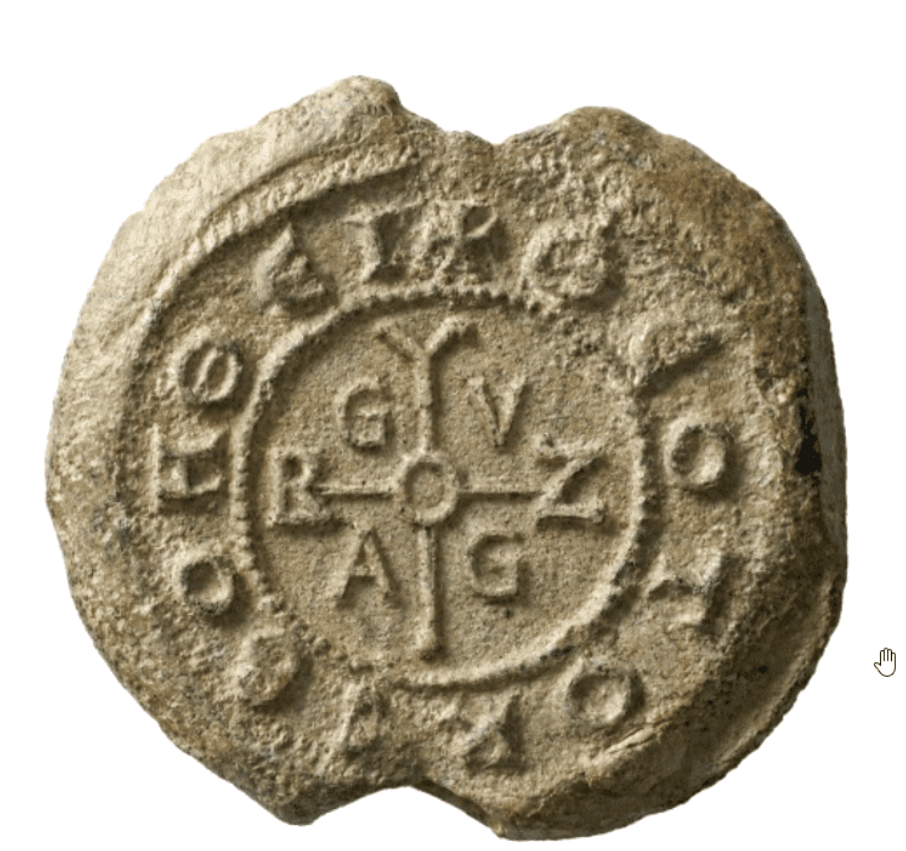
The project relies on evidence from a variety of sources (historiography, epistolography, hagiography, monastic archives, military manuals, epigraphy), but most of the information comes from molybdoboulla (seals), the lead disks that the Byzantine officials used to secure and authenticate their official or private correspondence, which bear iconographic motifs and legends including their name, title(s), office(s) and area(s) of jurisdiction. All this evidence is critically examined for the creation — for the very first time — of reliable chronological catalogues of all the Byzantine thematic officials arranged according to area of jurisdiction (theme), administrative sector (military, civil, ecclesiastical) and office.
These catalogues, a conditio sine qua non for a meaningful and effective trans-thematic comparison, offer an unparalleled insight into the prosopography and administrative structure of each theme, revealing at the same time important information on the history of Byzantine institutions, the political and social history of Byzantium (ethnic identities, hierarchies, professional mobility, nepotism, personal ambitions, religious sentiments, cultural level), as well as Byzantine art (iconography).
A targeted prosopographic study
The Byz-GOVAG Research Project is above all a targeted prosopographic study focusing specifically on the thematic officials, who form a very special group due to the nature of their job.
As defenders of the empire’s territorial integrity (military officials) and guarantors of the implementation of the imperial policy on financial (tax collectors) and judicial matters (judges), they formed the backbone of the Empire and safeguarded its cohesion. Consequently, the appointment of trusted and capable officials, as well as their wellbeing and the unobstructed exercise of their duties, was a major concern for the central government.
The existence and prosperity of the Empire relied on the detailed reports that these officials sent to the capital on a regular basis. Thus, provincial state officials are de facto among the best represented social groups on seals.
Since these officials exercised their duties during a specific (often short) tenure and succeeded each other in the same post, their seals offer the best research framework that innately facilitates the identification of the issuers and the narrower dating of their seals.
The study and arrangement of the seals issued by provincial state officials according to their office (military, civil) and area of jurisdiction promotes a “vertical” view of the Byzantine society, targeting a specific social group active within a chronological framework defined not by extrinsic factors but by the life span of the administrative institution.
Key methodological innovations
The targeted selection of the material (only lead seals by state officials bearing a geographic designation are considered).
The exhaustive effort to locate all the relevant material in published and unpublished, public and private collections, archaeological reports, and auction catalogues (printed and online).
The autopsy (as much as this is possible) of the relevant material.
The scrutiny of all the relevant data to determine the number of boulloteria used by an official during his career and confirm readings, dates, and interpretations of each seal.
The reconstruction of the cursus honorum (career stages) for each one of the officials, based on the triangle: OFFICIAL [PN] — BOULLOTERION [BL] — MOLYBDOBOULLON.
Identifiers & conventions
All thematic officials are identified by a unique Prosopographic Number (prefix PN_) in square brackets, following their first name. Numbers 1–500 are reserved for Hellas, 501–1000 for Opsikion, 1001–1500 for the Anatolikoi and 1501–2000 for the Kibyrraiotai. Molybdoboulla are designated by prefixes Hellas_, OPS_, ANAT_ or KIB_ followed by a unique Arabic number. Boulloteria use the prefix BL_ followed by the owner’s PN and an ordinal for each known boulloterion.
The results of the Byz-GOVAG Research Project in print
The first results of the Byz-GOVAG Research Project were published in the collective volume BYZ-GOVAG. Studies on the Prosopography and Administration of the Byzantine themata, eds. Olga Karagiorgou, Pantelis Charalampakis, Christos Malatras, Academy of Athens: Research Centre for Byzantine and Post-byzantine Art 2021 (900 p., 638 coloured photos, 241 B&W photos, 6 coloured maps. ISBN: 978-960-404-392-7).
The four extensive studies included in this volume on the themes of Hellas (Olga Karagiorgou), Opsikion (Christos Malatras), the Anatolikoi (Christos Malatras) and the Kibyrraiotai (Pantelis Charalambakis) are accompanied by extensive appendices that present for the first time detailed catalogues in chronological order of all the thematic officials by area of jurisdiction and office, as well as a description of the 1,110 thematic molybdoboulla directly related to this research.